Interior Painting
Overview
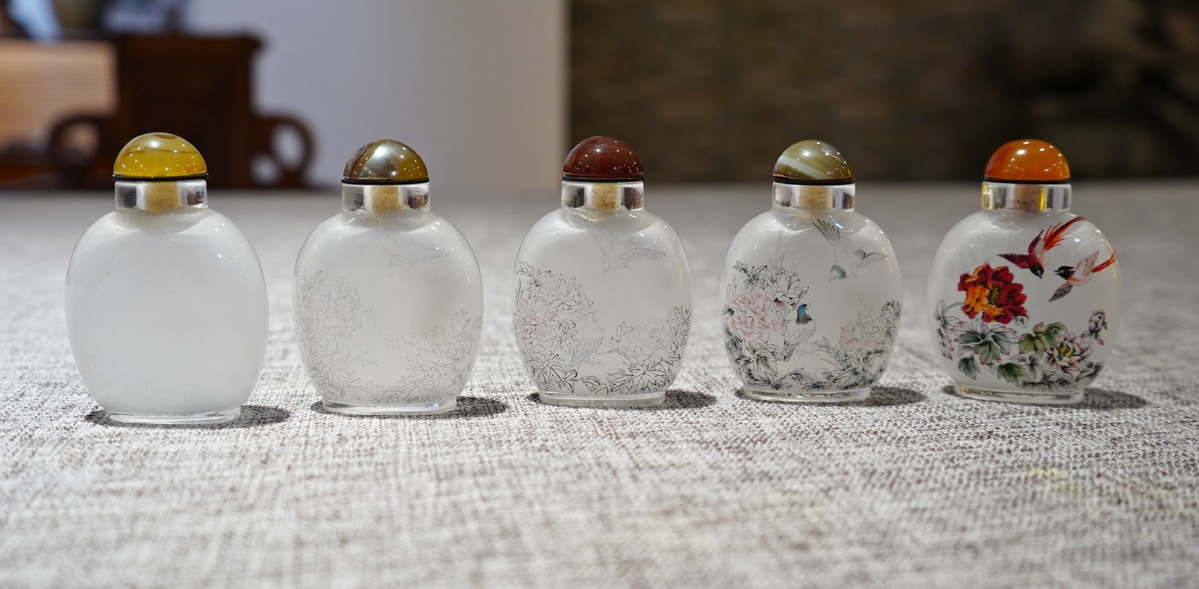
Interior painting is a specialized and intricate art form that involves painting on the inner surfaces of containers, often glass bottles, using a delicate and precise technique. This art form, known as "neihua" in Chinese, is particularly renowned in certain regions of China, such as Hengshui city in Hebei province, where it is recognized as a cultural heritage. Artists use a specialized bamboo pen with a hook-tipped brush to create detailed paintings through the narrow openings of these containers, showcasing scenes and images ranging from landscapes to portraits with impressive detail and color.
Historical Background
The technique of interior painting has its roots in the production of snuff bottles during the Qing Dynasty (1644-1911), a period when these bottles were used to contain powdered tobacco. The snuff bottles became a symbol of status among the aristocracy, often featuring intricate carvings or paintings on their surfaces. As snuff usage declined, the artistic aspect of these bottles gained prominence, leading to the evolution and popularity of interior painting as a collectible art form. In 2006, Hengshui interior painting was officially listed as a national-level intangible cultural heritage in China, highlighting its cultural significance and historical value.
Technique and Tools
The process of interior painting requires a high level of skill and dexterity. Artists use a special bamboo pen with a fine hook-tipped brush to navigate the narrow openings of glass containers. The inner surfaces are often frosted to provide a rough texture that better holds pigments, as opposed to smooth surfaces that would hinder the application of color. The painting process involves several steps: composition planning, sketching, delineation, wrinkle-removal, and finally, coloring. Techniques such as stippling, cross-hatching, and rubbing are employed to add depth and dimension to the artwork.
Evolution and Modern Influence
The craft of interior painting has undergone significant development over the years. Pioneers like Xue Jingwan in the 1950s introduced new techniques and tools, integrating elements from traditional Chinese painting into the art form, which allowed for greater expression and diversity in interior painting. With increasing appreciation for traditional crafts, interior painting has not only been preserved but also modernized with contemporary themes and vibrant pigments. Today, artists like Li Shaoyue are at the forefront of this evolution, blending traditional techniques with modern aesthetics and subjects, thereby keeping the art alive and relevant.
Prominent Artists and Contributions
Li Shaoyue, a contemporary artist, has made significant contributions to the field of interior painting. Her work is characterized by its precision and the integration of modern themes into traditional techniques. Under the guidance of her father and other mentors, she has honed her skills and achieved recognition in various art exhibitions. Her innovative approach, such as using unconventional canvases like Moutai liquor bottles, has brought fresh perspectives to the art form. Moreover, Li and her father are actively involved in training the next generation of artists to ensure the continuity and development of interior painting.
Cultural Significance
Interior painting holds immense cultural value as it represents a unique intersection of art, history, and craftsmanship. It is a testament to the rich artistic heritage of regions like Hengshui and Zibo, where traditional crafts are celebrated and preserved. The art form not only serves as a medium of cultural expression but also as a bridge connecting past traditions with contemporary artistic trends. Through exhibitions and cultural exchanges, interior painting continues to attract global attention, fostering mutual understanding and appreciation across different cultures.
Global Recognition and Exchange
The art of interior painting has gained international recognition, drawing interest from art enthusiasts and collectors worldwide. Cultural events and exhibitions, such as the China (Zibo) International Ceramics Exposition, showcase the skill and beauty of interior painting alongside other traditional crafts. These events serve as platforms for cultural exchange, allowing artists to share their work with a global audience and fostering greater appreciation for this unique art form.
By preserving its traditional techniques while embracing modern influences, interior painting continues to thrive as a vibrant and dynamic form of artistic expression. Its ongoing evolution and adaptation to contemporary themes ensure that it remains a cherished part of the cultural landscape, both in China and beyond. Article reference1. Zibo attracts global visitors with artistic heritage. chinaservicesinfo.com. 20232. Bottling up their talent. chinadaily.com.cn. 20233. Hengshui interior painting: A big world sketched inside a small bottle. chinadaily.com.cn. 2021Photo Gallery(10 pictures)CategoriesArtsTagChinese PaintingRelatedHengshui Interior PaintingCatalogue1. Overview2. Historical Background3. Technique and Tools4. Evolution and Modern Influence5. Prominent Artists and Contributions6. Cultural Significance7. Global Recognition and Exchange- - - []








